
Is America Losing a Generation of Children to Hunger?
By Terrence Moorehead, Co‑Founder, RipLine Foundation
You don’t have to be an athlete to know what hunger feels like. Skip a meal or two and you feel it everywhere — your focus drifts, your patience thins, your body slows down. Now imagine that’s normal. Not for a busy afternoon. For your whole childhood.
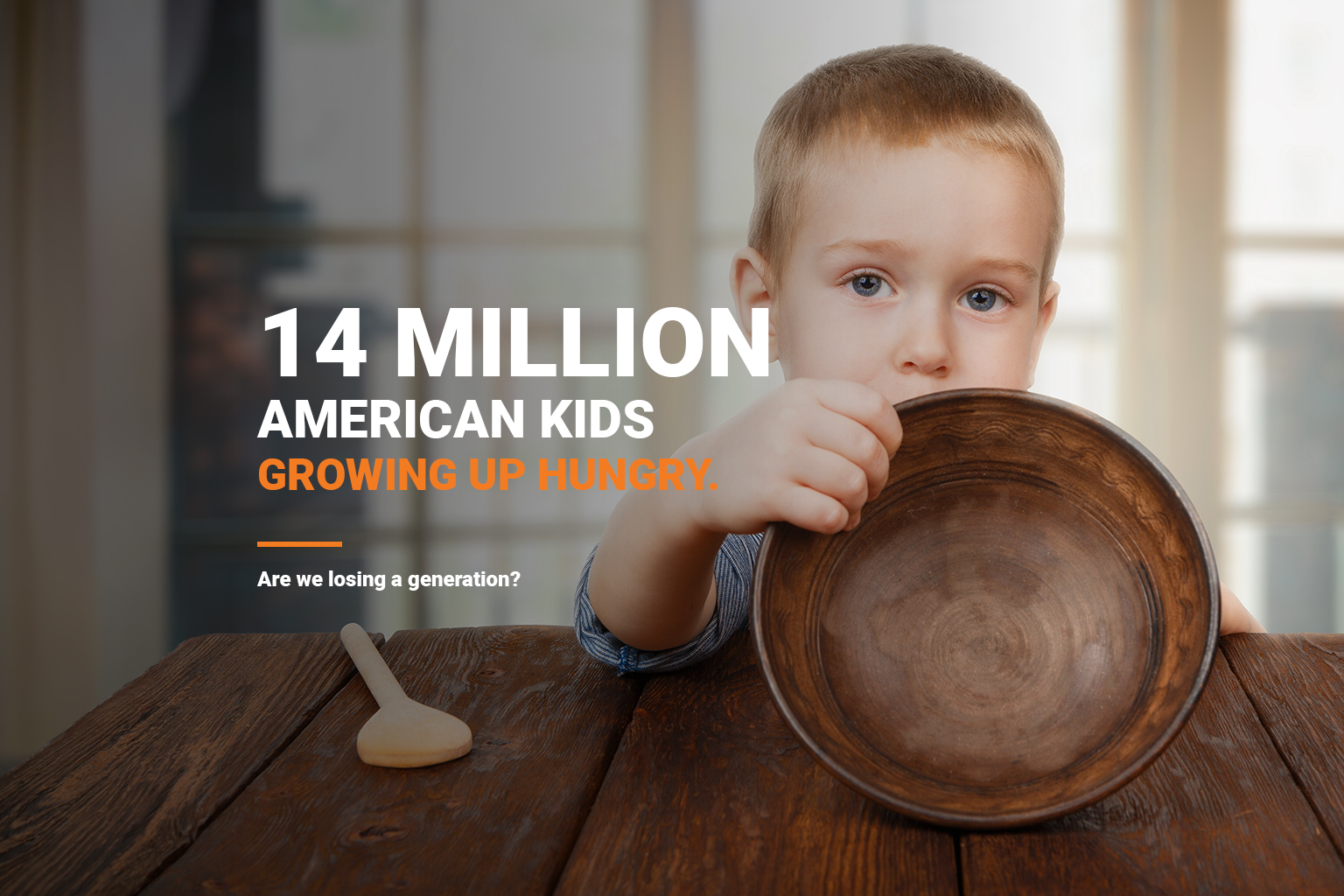
Right now, that’s the reality for nearly 14 million American children.
In 2024, that’s how many kids lived in households without reliable access to enough food — 14 million growing up without the fuel a body and a brain need to thrive. That’s not a statistic. That’s a developmental emergency. And since 2024, it’s only gotten worse.
Hunger is stealing our future
Hunger doesn’t just make children uncomfortable — it changes them. We’re not talking about a kid being a little cranky before lunch. We’re talking about real, lasting damage to their brains, their bodies, and their futures.
What hunger does to a child’s brain
- It slows brain development. The first three years of life are when a child’s brain grows fastest — laying the wiring everything else gets built on. Without enough food, that wiring doesn’t form the way it should. Children’s HealthWatch, a network of pediatric researchers, has shown again and again that young children in food‑insecure households are 2–3 times more likely to fall behind in language, motor skills, and social and emotional development (Cook et al., Archives of Pediatrics & Adolescent Medicine, 2004). The reason is simple: kids aren’t getting the nutrients — iron, zinc, healthy fats — that growing brains need. In plain terms, hunger slows down how a brain builds itself.
- It hurts how kids do in school. Hunger doesn’t stay home — it walks right into the classroom. In a landmark study by Casey et al. in Pediatrics (2005), children who experienced hunger were twice as likely to repeat a grade, twice as likely to need special education, and three times as likely to have behavioral problems. These aren’t kids having a rough morning. They’re carrying a disadvantage that follows them for years.
Feed the Children shared the story of an Oklahoma father of three who lost his job of 13 years. His daughters’ meals fell apart — skipped breakfasts, cheap calories, constant hunger. Their school counselor noticed grades slipping and the girls pulling away from friends. That’s what losing a generation looks like.
- It shows up as “bad behavior.” Hunger often gets mistaken for a behavior problem. A 2024 study by Chen & Yeung in PLOS ONE found that food insecurity in early childhood predicts more aggression, more anxiety, more trouble managing emotions, and more behavior problems at school. There are two big reasons: the brain isn’t getting what it needs, and the family is under enormous stress. So when a hungry child is labeled “disruptive,” what we’re often seeing is a child whose body is in crisis.
Project Bread shared the story of a Boston mother whose 7‑year‑old son couldn’t focus at school whenever food ran low at home. He grew irritable, anxious, exhausted. His teachers saw a behavior problem. His mom knew the truth: her son’s brain just didn’t have enough fuel. That’s what losing potential looks like.
What hunger does to a child’s body
It wears their bodies down. The American Academy of Pediatrics has been clear: kids in food‑insecure homes are about twice as likely to be in fair or poor health, and they get hit harder by asthma, anemia, and frequent infections. Not eating enough weakens the immune system and stirs up inflammation — which means more sick days, more doctor visits, and more time out of school. Every one of those gaps adds up.
What hunger does to a child’s future
- It limits what they can do as adults. The damage doesn’t end in childhood. A 2021 review by Gallegos et al. in the International Journal of Environmental Research and Public Health connected early‑childhood food insecurity to lower school completion, lower lifetime earnings, higher risk of chronic disease as adults, and a harder time solving problems and adapting to change. That’s the “lost generation” effect in plain numbers: kids who grow up hungry have a steeper climb, for life.
- It actually changes the brain. This isn’t only about behavior — it’s about anatomy. Brain‑imaging research summarized by the American Psychological Association and others shows that children exposed to chronic hardship, including food insecurity, can end up with smaller memory and learning centers, slower development in the parts of the brain that handle planning and self‑control, and an overactive stress response. When we say we’re losing a generation, this is what we mean: we’re letting conditions persist that physically reshape children’s brains — and rob them, and our country, of what they could become.
The drivers are clear — and fixable
This crisis isn’t happening because we don’t have enough food. It’s happening because wages haven’t kept up with inflation, food prices have jumped, and programs that used to fill the gaps — like universal school meals — have been rolled back. Families across America are facing a generational crisis, and our kids are paying for it.
So what can we do about it? We can stop waiting for somebody else to fix it and start mobilizing the people in our own corner — friends, family, coworkers, neighbors, the people we walk, hike, and ride with — and turn everyday energy into help that actually reaches a child.

That’s where the RipLine Foundation comes in
RipLine Foundation rallies the outdoor community — every walker, runner, hiker, and rider — to feed kids in need.
We started RipLine because of a simple idea: the people who love being outside — who walk, run, ride, hike, ski, or just lace up after work to clear their head — make up one of the biggest, most generous communities in the country. We move because it makes us feel alive. What if that same movement could help a child stay alive, healthy, and growing?
Last year, 168 million Americans got outside to move. That’s almost half the country. Imagine even a slice of that energy aimed at one of the most fixable problems we have.
That’s the whole idea behind Miles in the Wild™.
Miles in the Wild is one of our key challenges — built to rally the outdoor community and bring people together in the fight. It runs May through September. Five full months. Plenty of room to find your rhythm, pick your distance, and rack up miles on your schedule. The first step is simple: head to riplinefoundation.org and sign up as a Leader. Once you’re in, you’re the spark.
Here’s how it works:
- Pick your distance. 50, 100, 200, or even 400 miles between May and September. Whatever feels like a stretch for you.
- Move it any way you love. Walk it. Run it. Bike it. Hike it. Solo, with a friend, as a family, or with a whole crew. Take the kids. Take the dog. Bring along the buddy who needed an excuse to get outside.
- Be a Force Multiplier. This is where it gets fun. As a Leader, you’re not just logging miles — you’re rallying your people: family, friends, coworkers, your run club, your church, your group chat. Every dollar raised provides up to 10 meals for children in need, and 100% of what we raise goes to trusted partners on the front lines of childhood hunger. So $100 of your own becomes $1,000+ once your network is in. That’s the multiplier.
It’s built to be fun. You set your own pace. You set your own schedule. Track your miles however you already do. Climb the leaderboards. Share your progress. Cheer on a stranger in another state. Trash‑talk your friends in the best possible way. Do it solo, do it as a team, do it as a family, do it as a crew — the goal isn’t perfection, it’s showing up and bringing people with you.
Here’s why this year matters. In 2026, RipLine is committing to provide one million meals for children in need. Not someday. This year.
One million meals gets built one mile at a time. One Leader at a time. One Saturday morning, one sponsor, one child who doesn’t go to bed hungry.
If you’ve been looking for a reason to lace up that you can actually feel good about — head to riplinefoundation.org, sign up as a Leader, and bring your people with you.
———
We are at risk of losing a generation to hunger. We’re not out of time — yet. But “yet” is doing a lot of work in that sentence.
Every mile you log, every dollar you raise, every friend you pull in is a child fed and a future kept open.
Sign up at riplinefoundation.org. Pick your distance. Rally your crew. Move for a kid who can’t.
Feeding kids isn’t charity. It’s how we protect the next generation.
Sources
Cook, J.T., et al. “Food insecurity is associated with adverse health outcomes among human infants and toddlers.” Archives of Pediatrics & Adolescent Medicine (2004). · Casey, P.H., et al. “Child food insecurity and adolescent academic performance and behavioral outcomes.” Pediatrics (2005). · Chen, Y., & Yeung, W.J. “Early childhood food insecurity, behavior, and child outcomes.” PLOS ONE (2024). · Gallegos, D., et al. “Food insecurity and child development: A state-of-the-art review.” International Journal of Environmental Research and Public Health (2021). · American Academy of Pediatrics (AAP). · American Psychological Association (APA). · Children’s HealthWatch. · Feed the Children. · Project Bread.